Council, Explained — Municipal Budgets are a Balance, not a Magic Trick.
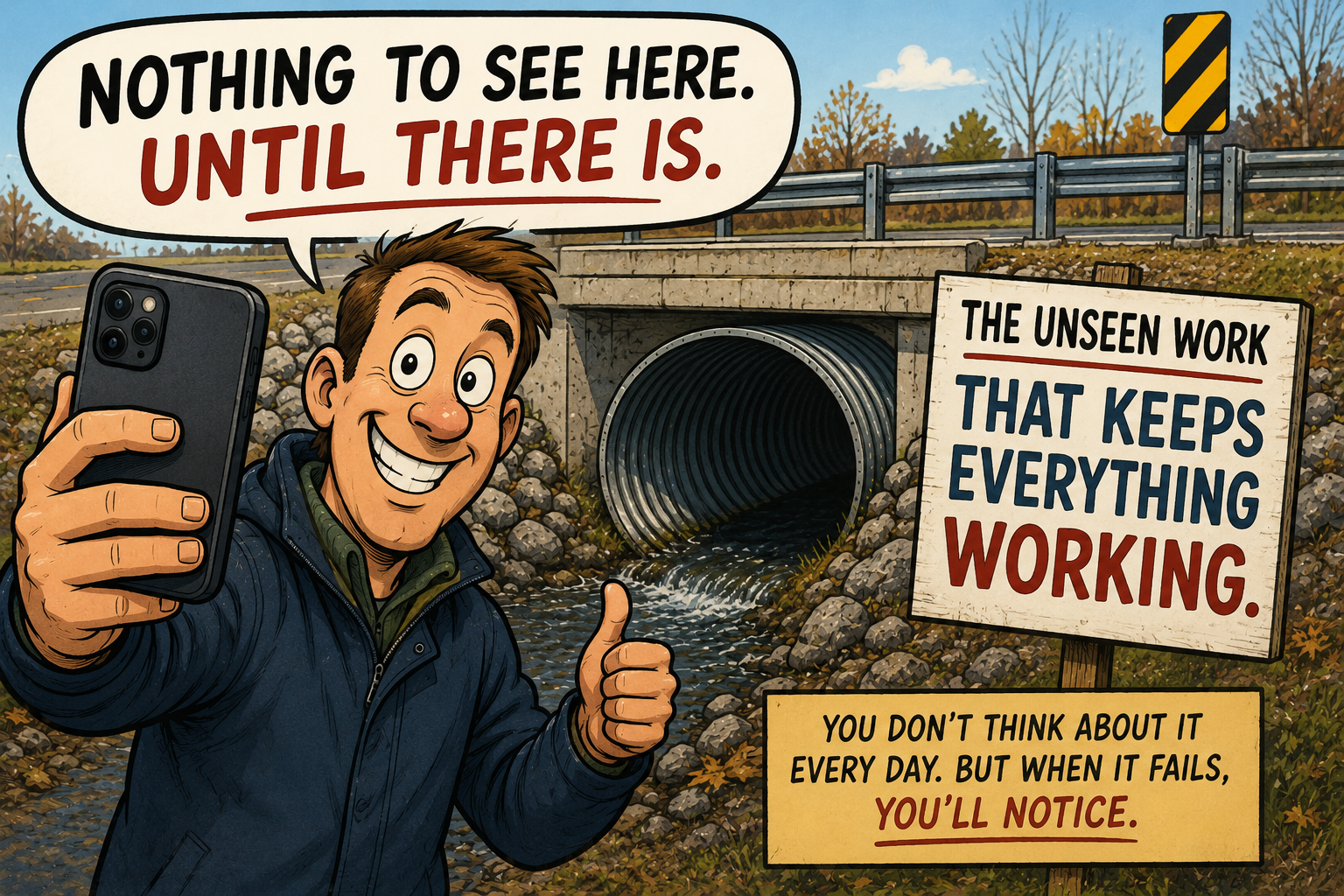
Image created with AI.
Editor: Laurel Davies Snyder
You Want Lower Taxes. You Also Want the Roads Plowed. And a Library. And a New Recreation Centre.
Municipal Budgets are a Balance, not a Magic Trick.
No one likes opening a tax bill.
There is no thrill of civic joy when the envelope arrives, or when the automatic withdrawal comes out, or when you receive a notice saying that the amount has gone up again. Most people do not look at their household budget and think, “What I really want and need this year is another increase from the municipality.”
People are tired. Groceries cost more. Housing costs more. Insurance costs more. Gas, hydro, childcare, repairs, interest rates, rent, mortgages — all of these things are moving in one direction…up. So, when a candidate for municipal council knocks on the door and says, “I am going to hold the line on taxes,” or “I am going to find savings,” or “I am going to stop the waste” their words and messages land exactly where they are designed to land. Their promises resonate with the part of us that is not only tired of paying more, but also with the part of us that is really worried about how to manage all of the rising costs and really wants to find a solution. This does not make you as a voter selfish; it makes you normal.
The challenges of affordability are real, and municipal governments should not be casual about asking people for more money, and budgets and plans should not be vague. Every dollar collected through taxes comes from someone’s household, someone’s business, someone’s retirement income, someone’s grocery budget, or someone’s already-stretched paycheque. Taxpayers are right to ask whether money is being spent carefully and according to a well-thought-out plan and defensible budget. They are right to question increases. They are right to expect council to take the tax bill seriously.
But there is a flipside to the discussion about rising taxes and affordability. Yes, people want lower taxes. But people also want the roads plowed. And the potholes fixed, the arena open, the fire department always ready, the parks maintained, the library funded, the building permits processed in a timely manner, the By-laws enforced, the sidewalks cleared, the bridges inspected, the water system working, the garbage collected, the phones answered, the trails improved, and people want the community to look like someone is taking care of it. This is where the conversation gets uncomfortable. The Tax Bill is not just a standalone and random number. These dollars are attached to the services, assets, expectations, and responsibilities people rely on every day, even when they are not thinking about municipal government at all.
The Promise Everyone Wants to Believe
Every election has some version of the candidate who says taxes can be lower, services can be better, roads can be fixed, growth can be managed, recreation can be improved, staff can be more responsive, infrastructure can be maintained, and the whole thing can be done by “decreasing spending and cutting waste.” It is a beautiful promise, isn’t it?
It is also like you promising that you are going to renovate the kitchen, replace the roof, fix the truck, go on vacations, and save more money, all while reducing your hours at work (and your paycheque). Is this possible? Maybe. But most people would ask to see the math.
Municipal budgets are not mysterious because someone is trying to hide them. They are challenging to interpret because they are big, complex, and full of the things you don’t notice until they fail, and things that cost more than anyone wants them to cost.
All aspects of a growing community cost money. Winter control, maintaining and rebuilding roads, insurance, fire protection and policing, bridges, culverts, arenas, libraries, software, equipment, vehicles, wages, benefits, fuel, hydro, debt payments, reserves, and capital projects are all included in municipal budgets. Even the things that many might find ‘boring’ are expensive but these ‘boring things’ become very exciting the second they stop working.
A candidate saying “I will lower taxes” should never be the end of your conversation with them. It should be the beginning of an overall discussion.
How will you lower taxes?
What services will be removed or reduced?
What projects will be delayed?
Are you going to use the municipal reserve fund?
Are you going to increase fees?
Are you cutting municipal positions which would affect customer service?
Are you cancelling approved plans?
Will an of these cuts this result in higher risks?
These are not hostile questions. These are budget questions.
The Myth of the Big Obvious Pile of Waste
One of the easiest things to promise in an election is that the “waste” will be cut.
Everyone likes this promise because of course everyone is against waste. No one campaigns in favour of waste. No taxpayer wants their money wasted. No responsible council should defend waste. No municipal staff person should be offended by the idea that processes can be improved or spending can be reviewed.
However, “waste” has become a word people will quickly use outside of the overall context, or without connecting the conversation about “waste” to a specific line item in the municipal budget.
Of course there may be efficiencies to find. Municipalities can modernize systems, improve procurement, share services, review staffing models, reduce duplication, better use technology, sell unused assets, rethink facilities, or stop doing things that are no longer relevant for the community today. A good council should be willing to consider these options.
But voters should be cautious when a candidate talks about “waste” as if there is a giant barrel of money sitting behind the municipal office marked “unnecessary spending” just waiting for the right person to come along and open it.
More often, the “waste” that someone wants to cut from the municipal budget will also be a service someone values, a staff position someone relies on, a maintenance program no one noticed until things stopped being maintained, a municipal reserve fund contribution meant to avoid future debt, a consultant hired because the municipality does not have in-house expertise, or a capital project that appeared discretionary and optional until the thing it was meant to fix becomes an emergency. That does not mean the spending is always right; it means the details matter.
A candidate who promises to “cut waste” should identify the specific budget items they would cut and explain the reasons and potential effects on taxpayers and the community. Vague assurances that everything will be “fine” if people are simply less careless are not enough. Which projects, positions, or services would be cut? Which departments, contracts, facilities, neighbourhoods, and employees would be affected? Which budget lines do they consider “waste”? “Cut waste” is not a financial plan. It is a feeling.
No One Cuts a Ribbon for a Culvert or Posts a Selfie with a New Stormwater Pipe.
One of the most difficult parts of municipal budgeting is understanding that many of the most expensive things are also the least glamorous.
No one cuts a ribbon for a culvert. No one takes a selfie with a stormwater pipe. No one posts a heartfelt Facebook tribute to a properly funded equipment replacement reserve. But maybe these things should be celebrated by everyone - these are the types of budget line items that determine whether a municipality is being responsible or is just lucky that things haven’t broken.
A council can keep taxes lower in the short term by continuing to put things off. Municipal council can delay road work, reduce reserve contributions, stretch the life of equipment, postpone building repairs, avoid difficult conversations about facilities, and hope nothing major fails before the next election. Sometimes deferring a project is reasonable; not everything has to be done immediately. Priorities matter. Timing matters. Scope matters. A municipality should not spend money simply because a project exists on a list. But deferral is not magic. A road that is not repaired still deteriorates. A bridge that needs work does not become younger. A roof that is near the end of its life does not start negotiating because council is under political pressure. The costs do not disappear. And as projects are delayed, costs invariably increase over time. That is the part of the budgeting and tax conversation people rarely hear during a campaign.
A low tax increase can look responsible in the year it happens. It can make a council look disciplined. It can make a candidate sound brave. It can make everyone briefly feel like the municipality found a painless path to maintaining and even improving the community without raising taxes. Then, a few years later, a project that was deferred is now urgent; deferring it didn’t remove the need, it just delayed the costs. And as labour costs, land costs, and material costs have increased over time, the municipal reserve fund may no longer be enough to cover the actual costs, and the grant window may have closed. So, the next council may be forced to raise taxes, borrow money, or cut something else to deal with a problem that did not need to be a problem; the situation did not happen overnight. This is how communities end up paying for yesterday’s restraint with tomorrow’s tax increase. Deferred maintenance is not always savings. Sometimes it is just a more expensive way of pretending.
The Part We Do Not Like Saying Out Loud
If we want lower taxes, what are we willing to do with less of?
That is the part no one likes. Not voters. Not candidates. Not Councils. Not staff. The conversation becomes very real the minute it moves from “cut taxes” to explaining that these cuts usually result in reducing and even losing parts of a community people have grown to expect and rely on. And even if lower taxes sound good in general, everyone has different values and priorities, so debating what services “should” be cut or reduced is usually a root cause of disagreements. Do we plow roads less often? Do we reduce hours at the arena? Do we delay park upgrades? Do we take longer to process permits? Do we reduce library funding? Do we cut back on by-Law enforcement? Do we defer road resurfacing? Do we increase user fees? Do we close or consolidate facilities? Do we stop contributing as much to reserves? Do we accept more risk?
There may be good reasons to do some of those things. Municipal staff need to take the time to consider the options and provide council and taxpayers with an analysis. That is what honest budgeting requires. Not scare tactics. Not automatic tax increases. Not treating every service as untouchable. Just clear, concrete, and thorough communication explaining the impacts of a lower tax bill like cancelling projects, reducing, or removing services, decreasing the municipal reserve fund, or taking on more risk somewhere else. And costs are not abstract. They are services, assets, people, timelines, risks, and expectations.
User Fees Are Still Paid by Users
Municipalities can use other tools to make the tax rate look better without actually making life cheaper. Moving the costs somewhere else. Increasing user fees. Drawing from the municipal reserve fund. Borrowing. Using one-time funding. Delaying capital work. Pushing costs into water and wastewater rates. Relying on development charges where allowed. Shifting more costs to the people using a service. Hoping a grant comes through.
Sometimes these tools are completely appropriate and should be explored. Adjusting user fees can make sense. Taking on debt can be a responsible approach for long-term infrastructure. Municipal reserve funds exist for a reason. Grants are important. Development-related costs should be recovered where legislation allows it. But none of those choices are free and all decisions have impacts.
People still pay user fees. A municipal reserve fund used today is not available tomorrow. Debt has to be repaid. The need for a delayed project still exists. A grant may reduce the local share of the overall cost, but grants are typically not able to be used for future operating costs. A new facility still needs heat, hydro, insurance, maintenance, programming, and staff long after the grant is spent and the announcement photo is taken. This is why voters should be careful not to judge a municipal budget by the tax rate alone. A low tax increase does not automatically mean a municipality is financially healthy. A higher tax increase does not automatically mean a municipality is wasting money. The real question is how the municipal budget is structured and the processes that govern how it is spent.
Is the budget structured to maintain assets? To use municipal reserve funds or manage debt? Is the budget accounting for maintaining or increasing service levels as the community grows? Is it catching up from years of project deferrals and delays? Is it using one-time money for ongoing costs? Is the budget an honest representation of the expenses and what the community can afford?
These questions are harder than arguing about a percentage. They are also much more useful.
Affordability Deserves Better Than a Slogan
None of this is an argument for a municipality to issue blank cheques or set up automatic tax increases. Municipalities should be challenged. Municipal budgets should be carefully reviewed. Staff recommendations should be questioned. Councils should look for efficiencies. Community members should expect clear explanations. Candidates should bring ideas. Affordability should be taken seriously, especially when many people are already stretched thin. But affordability is too important to be reduced to a slogan.
A serious and balanced conversation about authority does not pretend that every tax increase is irresponsible or that every municipal service is sacred. A serious and balanced conversation questions what people value most, what they are willing to pay for, what can be done differently, what can wait, what cannot wait, what risks are acceptable, and what costs can be pushed into the future. This is a more difficult conversation. But it’s a much more honest conversation.
People understand that all parts of a community cost money. What frustrates people is feeling like they are always paying more and getting less, or paying more without an explanation, or hearing about decisions to cut services or projects without a clear understanding of what choices were available.
This is where councils and candidates need to do better. Not by pretending budgets are painless, but by honestly explaining what things really cost and the impacts of any proposed budget changes.
What to Listen for This Election
This election year, listen carefully when candidates talk about taxes.
The strongest answer is not necessarily the one that promises the smallest tax increase. The strongest answer is the one that shows that the candidate understands the impacts of a tax increase or tax cut, and what happens when costs are avoided instead of managed.
Listen for specifics. A serious candidate will commit to reviewing the budget and can identify the specific services, projects, policies, departments, fees, or capital plans they want to examine. They can explain whether their budget idea creates a one-time savings or ongoing savings. They can talk about what level of service might change. They can state clearly when something will cost money and explain why.
Be cautious of anyone who makes municipal finance sound easy.
Be cautious of anyone who claims that “taxes can fall, services can improve, infrastructure can be repaired, and no one will notice the trade-offs.”
Be cautious of anyone whose entire plan is to “cut waste” but who cannot tell you what the waste is.
And be especially cautious of anyone who treats the budget like a personality test, as though taxes only go up because the people around the table lack foresight, savvy, or courage.
Sometimes courage means saying no to spending.
Sometimes courage means admitting the bill can no longer be avoided without adding a high level of risk to the municipality.
What This Means in October
Your tax bill is personal.
It lands on your kitchen table or in your in-box. Paying this bill competes with groceries, mortgage payments, rent, retirement savings, business costs, childcare, and every other financial pressure all community members are carrying. No council should forget that. No candidate should dismiss it. No municipality should assume people can simply absorb more.
But even though your tax bill is personal, the funding provided by municipal taxes is communal. This funding pays for the things we expect to be there when we need them, things that we will need in the future, and many of the things we do not notice until they are cut or they fail. Municipal funding is connected to the roads we drive on, the water we drink, the parks we use, the fire truck we hope never has to come, the arena lights, the culverts under the road, the snowplows at 4 a.m., and the long list of municipal responsibilities that rarely trend online.
So, when someone promises to lower taxes, ask them to finish the sentence and answer the question: “lower taxes by doing what?”
That is not cynicism. That is citizenship. Because the easiest promise in municipal politics is that everything can cost less and get better at the same time. The truth is that budgets are choices about the community as a whole. And if a candidate wants your vote, they should be willing to tell you what choice they are actually asking you to make.
While you’re considering how to vote and the questions you want to ask, consider taking time to cut ribbons and post selfies and Facebook posts for the unsung and unnoticed parts of our communities that make a big difference in our lives. Things that we would notice of they disappeared. Taking time to share and celebrate what works and what you value in your community might matter to more people than you realize.